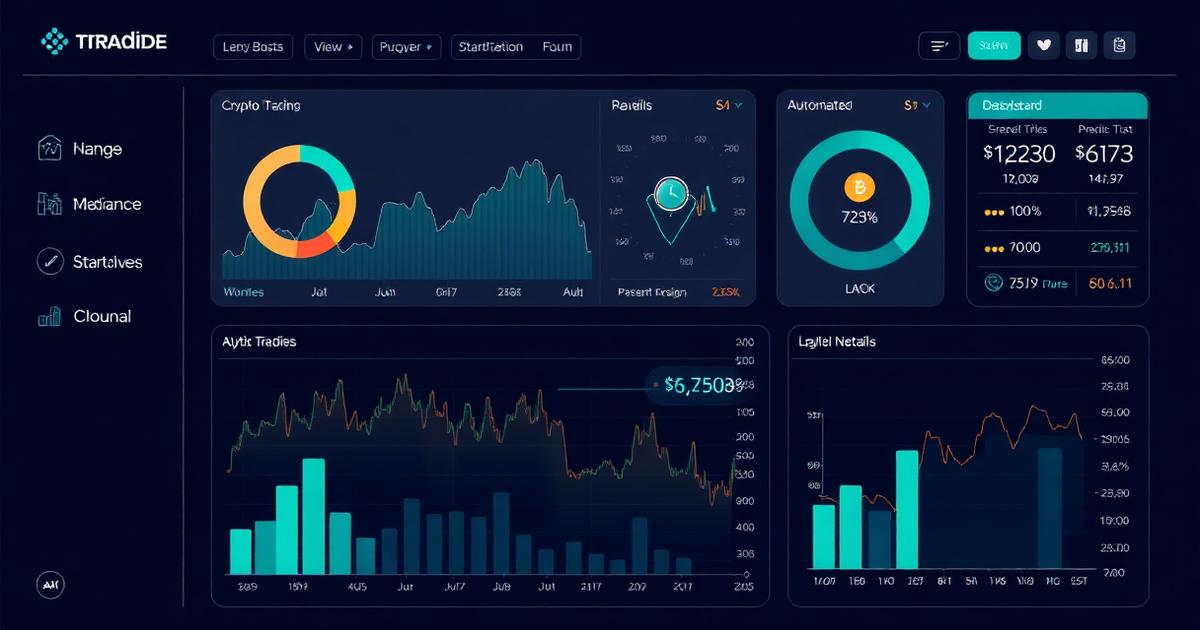
Automated Crypto Trading with AI
Artificial intelligence is revolutionizing cryptocurrency trading by enabling sophisticated automation that adapts to market conditions, learns from historical patterns, and executes trades with superhuman speed and precision. This comprehensive guide explores how AI-driven systems are transforming crypto trading from reactive manual strategies to proactive automated systems.
The Evolution of AI in Cryptocurrency Trading
The integration of artificial intelligence in cryptocurrency trading represents a fundamental shift from rule-based systems to adaptive, learning algorithms that improve performance over time. Modern AI trading systems combine machine learning, natural language processing, and advanced analytics to create comprehensive trading strategies.
Traditional trading bots follow predetermined rules and parameters, making them predictable and limited in their adaptability. Trading bot crypto systems powered by AI, in contrast, continuously analyze market data, learn from outcomes, and adjust their strategies based on changing market conditions.
The cryptocurrency market's 24/7 nature, high volatility, and vast amounts of available data make it an ideal environment for AI sniper bot systems. These automated platforms can process information faster than human traders while maintaining consistent performance without emotional interference.
Our automatic crypto sniper bot platform combines multiple machine learning techniques including pattern recognition, sentiment analysis, and predictive modeling to create comprehensive trading strategies that adapt to evolving market conditions while maintaining optimal risk-adjusted returns.
Machine Learning Models for Signal Generation
Effective AI trading systems employ various machine learning models, each optimized for specific types of market analysis and prediction tasks. Understanding these models helps traders select appropriate strategies for their objectives and market outlook.
Supervised learning models use historical price data and market indicators to predict future price movements. These models learn relationships between input features and desired outcomes, gradually improving their predictive accuracy through training on large datasets.
Unsupervised learning techniques identify hidden patterns and structures in market data without predefined target variables. These approaches excel at discovering unexpected relationships and emerging trends that might not be apparent through traditional analysis.
Deep Learning and Neural Networks
Deep learning models, particularly neural networks, excel at processing complex, multi-dimensional data to identify subtle patterns that traditional analysis might miss. These models can simultaneously analyze price action, volume, sentiment, and external factors to generate trading signals.
Convolutional Neural Networks (CNNs) are particularly effective for analyzing price charts and technical patterns, treating price data as images and identifying visual patterns that correlate with future price movements.
Recurrent Neural Networks (RNNs) and Long Short-Term Memory (LSTM) networks excel at analyzing time-series data, making them ideal for cryptocurrency price prediction and trend analysis applications.
Feature Engineering and Data Processing
Successful AI trading systems depend heavily on high-quality input data and sophisticated feature engineering. Raw market data must be processed and transformed into meaningful features that machine learning models can use to make accurate predictions.
Price-based features include traditional technical indicators like moving averages, RSI, MACD, and Bollinger Bands, as well as more sophisticated metrics like fractal dimensions and entropy measures that capture market complexity.
Volume analysis provides crucial insights into market sentiment and trend strength. Advanced volume features include volume profile analysis, money flow indicators, and order book dynamics that reveal institutional activity and market liquidity.
Execution Automation and Order Management
AI trading systems require sophisticated execution capabilities to translate signals into profitable trades while managing market impact, slippage, and transaction costs. Advanced execution algorithms optimize trade timing, sizing, and routing.
Smart order routing algorithms automatically select optimal exchanges and execution venues based on liquidity, fees, and current market conditions. This optimization can significantly improve execution quality and reduce transaction costs.
Dynamic position sizing algorithms adjust trade sizes based on market volatility, portfolio risk, and signal confidence. This adaptive approach helps maximize returns while controlling risk across different market conditions.
Real-Time Risk Management
AI-powered risk management systems continuously monitor portfolio exposure, market conditions, and system performance to protect against unexpected losses and system failures.
Volatility forecasting models predict market volatility changes and automatically adjust position sizes and risk parameters to maintain appropriate risk levels across changing market conditions.
Correlation analysis identifies when previously uncorrelated assets begin moving together, potentially increasing portfolio risk beyond acceptable levels. Advanced systems automatically rebalance portfolios when correlation patterns change.
For detailed implementation guidance and technical support, visit our comprehensive FAQ section where we provide step-by-step instructions for setting up, optimizing, and troubleshooting AI trading systems.
The future of cryptocurrency trading belongs to sophisticated AI systems that can adapt to changing market conditions while maintaining consistent performance. Success requires understanding both the technical capabilities and practical limitations of AI trading technologies. Vexor's AI crypto trading bot brings these capabilities into a single platform.