Short answer
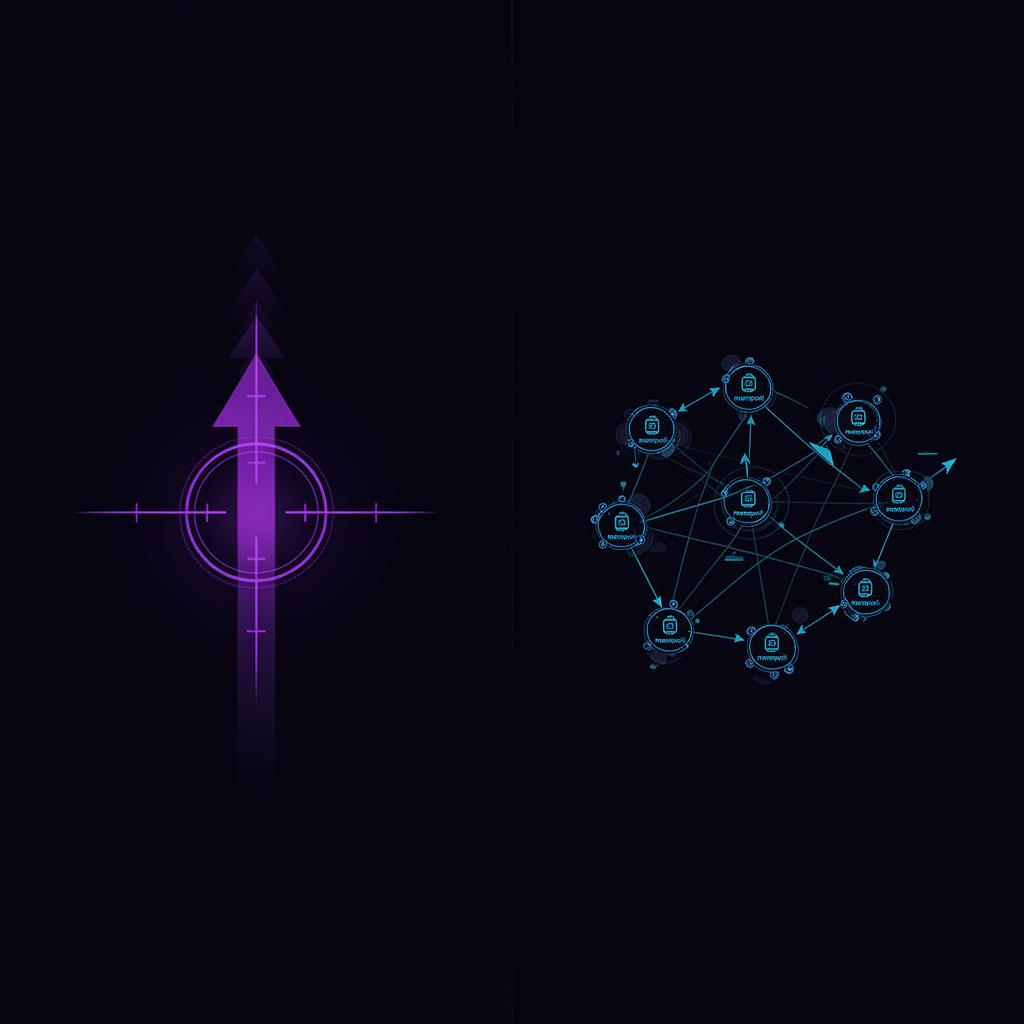
A sniper bot races to be the first buyer on a brand-new token launch. An MEV bot extracts value from transactions that are already in flight in the mempool or orderflow stream. They look similar from the outside — both are fast, both are automated, both run 24/7 — but they target different opportunities, carry different risks, and shine on different chains.
What each bot optimizes for
Sniper bots
Sniper bots optimize for entry timing on new assets. The opportunity exists in the first few seconds (or blocks) after a token has tradable liquidity. After that window closes, the edge is mostly gone.
The core loop:
- Detect a new pool, bonding curve, or liquidity event.
- Score the token for safety (mint authority, LP lock, top holders, honeypot patterns).
- Submit a buy at configured size, slippage, and priority fee.
- Manage the exit via take-profit, stop-loss, or time-based rules.
MEV bots
MEV bots optimize for value extracted from transactions in flight. The opportunity exists because pending transactions move prices in predictable ways, and a bot that sees the pending transaction first can position around it.
Common MEV categories:
- Arbitrage — close price gaps between DEXs or pools.
- Liquidations — repay undercollateralized loans on lending protocols and collect the liquidation incentive.
- Back-running — place a transaction immediately after a public, market-moving transaction.
- Sandwich trading — place a buy *before and a sell after* a victim's swap to extract value from the price impact they cause. This is the most contested category.
Trigger source
This is the cleanest way to tell them apart.
- A sniper bot's trigger is a launch event: new pair creation on Raydium, Orca, Uniswap, PancakeSwap, or a Pump.fun bonding curve.
- An MEV bot's trigger is a pending transaction: something already broadcast that has not yet been included in a block (on chains with a public mempool) or routed through a private orderflow channel.
Snipers care about the asset. MEV bots care about the transaction.
Risk profile
Snipers and MEV bots fail in different ways, which matters when sizing positions.
- Sniper bot risk is token risk. Most losses come from honeypots, rug pulls, malicious contracts, or simply illiquid tokens with no exit. Deep safety filtering is the main defense.
- MEV bot risk is execution risk. Most losses come from failed inclusion, gas burned on reverted bundles, miner/validator competition, and reorgs. Defense is technical: better routing, private orderflow, simulation, and bundle construction.
Snipers can survive a slow, careful execution stack as long as the safety layer is strong. MEV bots cannot — they live and die on infrastructure quality.
Chains and venues where each shines
- Sniper bots shine where new tokens launch frequently and gas is cheap enough that retail-sized snipes are viable. Solana, BSC, and Base see most sniping activity. Pump.fun in particular is a sniping venue more than an MEV venue.
- MEV bots shine where there is meaningful pending-transaction value to capture. Ethereum mainnet still has the deepest MEV opportunities thanks to higher per-transaction notional and a mature orderflow ecosystem. Solana MEV exists but has a different shape because of the lack of a traditional public mempool.
When to use which
A simple decision matrix:
- You want exposure to brand-new tokens at launch → sniper bot.
- You want to capture inefficiencies in pricing across DEXs → MEV bot (arbitrage).
- You want to capture liquidation incentives on lending protocols → MEV bot (liquidations).
- You are running large size and need infrastructure that competes with sophisticated extractors → MEV bot, and budget for the technical stack.
- You are running small experimental size on Solana memecoin launches → sniper bot is almost always the right starting point.
Note: sniping and MEV can coexist in the same trading operation, but the workflows do not collapse into one button. Treating "MEV vs sniping" as a feature toggle hides the strategy differences that make each one work.
How Vexor handles both
Vexor's MEV bot exposes MEV as a configurable strategy with explicit categories, slippage and blocklist controls, and per-trade execution analytics. The sniper workflow runs as a separate mode with its own AI Risk Engine, safety scoring, and server-authoritative exit profiles. The two share infrastructure but are surfaced as distinct strategies because, as this article hopefully made clear, they are different problems. For Solana launch sniping specifically, see the Solana sniper bot page.
Common confusions
- "Is a sniper bot a kind of MEV bot?" No — a sniper races to be the first buyer of a new asset, while an MEV bot extracts value from in-flight transactions. They share automation and speed, not opportunity type.
- "Does the same chain support both equally well?" No — Solana and BSC tilt sniper, Ethereum mainnet tilts MEV. Each chain's mempool model, gas profile, and orderflow ecosystem shape which strategy works.
- "Can one bot do both well?" It can run both, but the configuration, risk profile, and infrastructure needs are different enough that operators usually treat them as separate strategies rather than one combined mode.